We have all seen the 1652 Oak Tree Shilling.
Justin introduces it almost immediately in Beyond the Map’s Edge, and anyone who has spent much time digging into the treasure has probably spent at least a little time learning about the history behind it.
But something Justin said in a recent interview caught my attention.
The shilling in the treasure is not the first one he owned.
His first came from his grandfather.
That leaves a surprisingly simple question with a much less simple answer:
Which grandfather gave it to him, and why?
The Coin
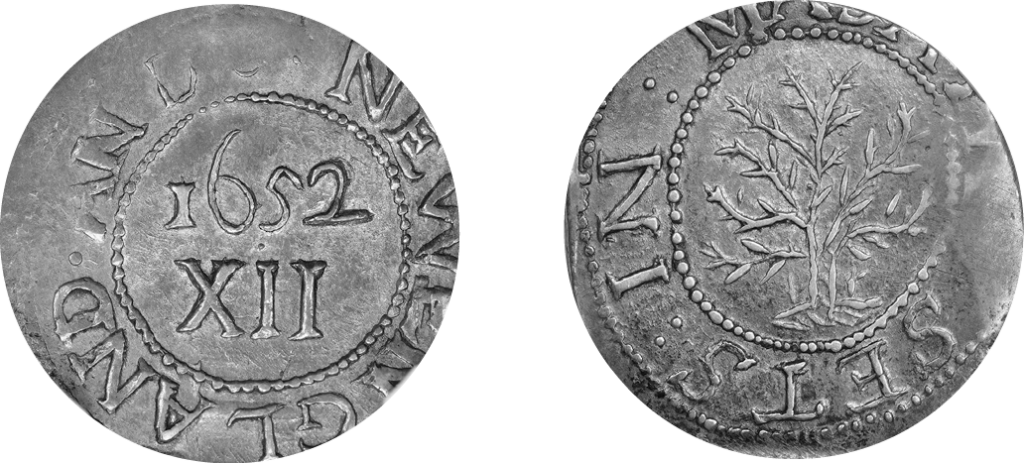
In 1652, the Massachusetts General Court authorized a mint in Boston and appointed John Hull and Robert Sanderson to operate it. Massachusetts needed reliable currency, and the colony took the unusual step of producing its own silver coins.
The earliest coins were followed by the Willow Tree, Oak Tree, and eventually Pine Tree designs.
One detail is particularly important here. Although the Oak Tree Shilling bears the date 1652, Oak Tree coins were actually produced several years later, generally around 1660 to 1667. The date remained 1652 across later Massachusetts silver issues.
That makes the coin interesting before we ever get to Justin’s story.
It belongs to a period when the colonies were still British possessions, but Massachusetts was already willing to act independently when necessity demanded it. The coin is therefore more than old silver. It comes from the long, complicated period in which colonial dependence and colonial self-government existed side by side.
Justin describes its significance much more simply:
“the story of, well, us.”
That phrase becomes important later.
The First Shilling
During X Marks the Pod, Episode 15, Justin explains that his first 1652 shilling was given to him by his grandfather.
There was only one problem. It was counterfeit.
Justin apparently discovered this later and could not bring himself to tell his grandfather. Eventually he purchased an authentic one, which is the coin now included in the treasure.
He also says the original counterfeit came from his grandfather’s collection. This is about as far as the direct evidence takes us.
Justin does not, at least in the material I have found, identify which grandfather gave him the coin.
So there are two candidates.
Two Grandfathers
Justin writes about both grandfathers in Beyond the Map’s Edge, but they occupy very different places in his story.
His maternal grandfather, Wayne Fitzwater, is the outdoorsman.
Justin describes him as a collector of discarded things, a military man, a game warden, and the family’s connection to the Rockies:
“Grandpa Wayne Fitzwater, my mother’s father, was our living link to the wild corners of the American Rockies.”
Grandpa Fitzwater therefore represents something important in Justin’s life: wilderness, collecting, exploration, and the outdoors.
That makes him a perfectly plausible candidate for someone who might have kept an unusual old coin.
Then there is Grandpa Posey. His role is different.
Grandpa Posey is Justin’s connection to Victorio Peak and to the family stories that helped turn treasure hunting from an interesting subject into something personal.
Justin describes one conversation with him as a turning point:
“That night, at age twelve, I became a treasure hunter.”
Both men clearly influenced Justin. So if we are going to favor one grandfather over the other, we need something more than personality.

The detail that keeps pulling me toward Grandpa Posey comes from the chapter “Postal Pilgrimage.”
After Justin’s encounter with the rattlesnakes, Grandpa Posey gives him the rattles. On its own, that might seem insignificant.
But it establishes something we otherwise do not see very often in the book: Grandpa Posey marking a shared experience by handing Justin a physical object connected to it.
That matters because Grandpa Posey is portrayed as reserved. He is not a character who explains himself endlessly. His actions tend to carry the weight.
The rattles therefore function almost like a physical version of a story.
They say: This happened. We were there. Remember it.
And that made me reconsider the shilling.
If Grandpa Posey was also the grandfather who gave Justin the counterfeit 1652 coin, perhaps the coin functioned in much the same way. As a story.
That does not prove Grandpa Posey gave Justin the shilling. But it gives us a pattern that makes him more interesting as a candidate.
The Illustration
There is another reason I began looking more closely at “Postal Pilgrimage.”
During the same X Marks the Pod interview, Justin is asked about clues hidden in the book’s illustrations. His response suggests that deliberately planting clues in illustrations would be difficult without revealing too much, and he notes that the illustrator does not possess special knowledge of the treasure’s solution.
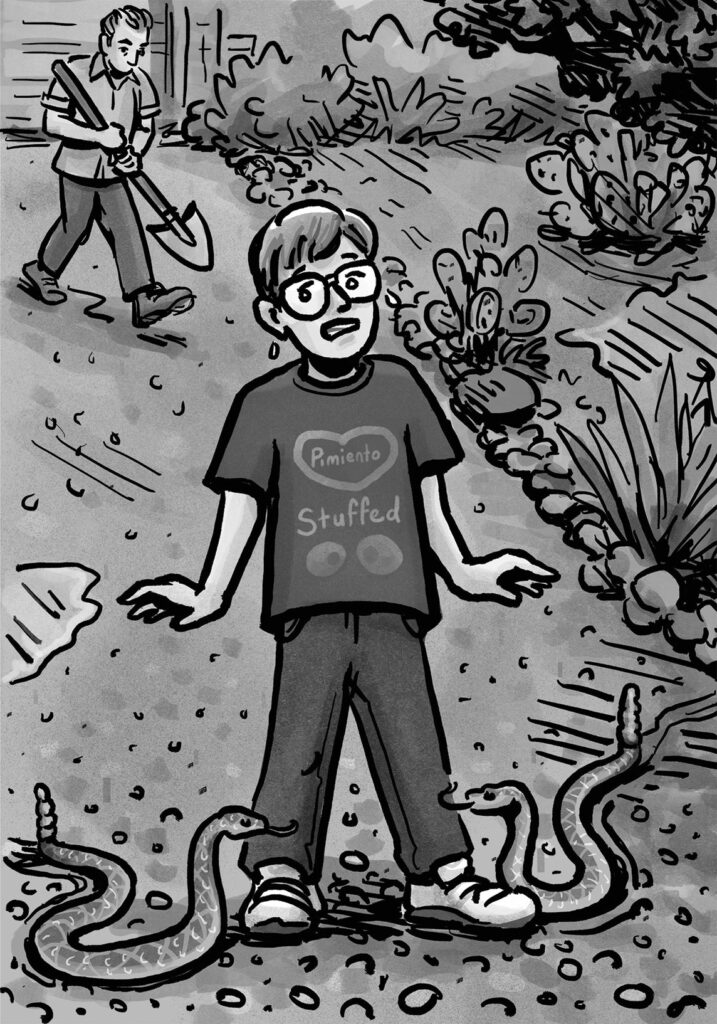
An illustration can contain imagery worth noticing without every object necessarily being an intentional clue. Still, the “Postal Pilgrimage” illustration contains several details that caught my attention:
- the divided rattlesnakes;
- the olive imagery on Justin’s shirt;
- the rattles preserved in a jar (in the story);
- and the title itself.
Individually, none proves anything but together, however, they produce a curious concentration of early American imagery.
The Rattlesnakes
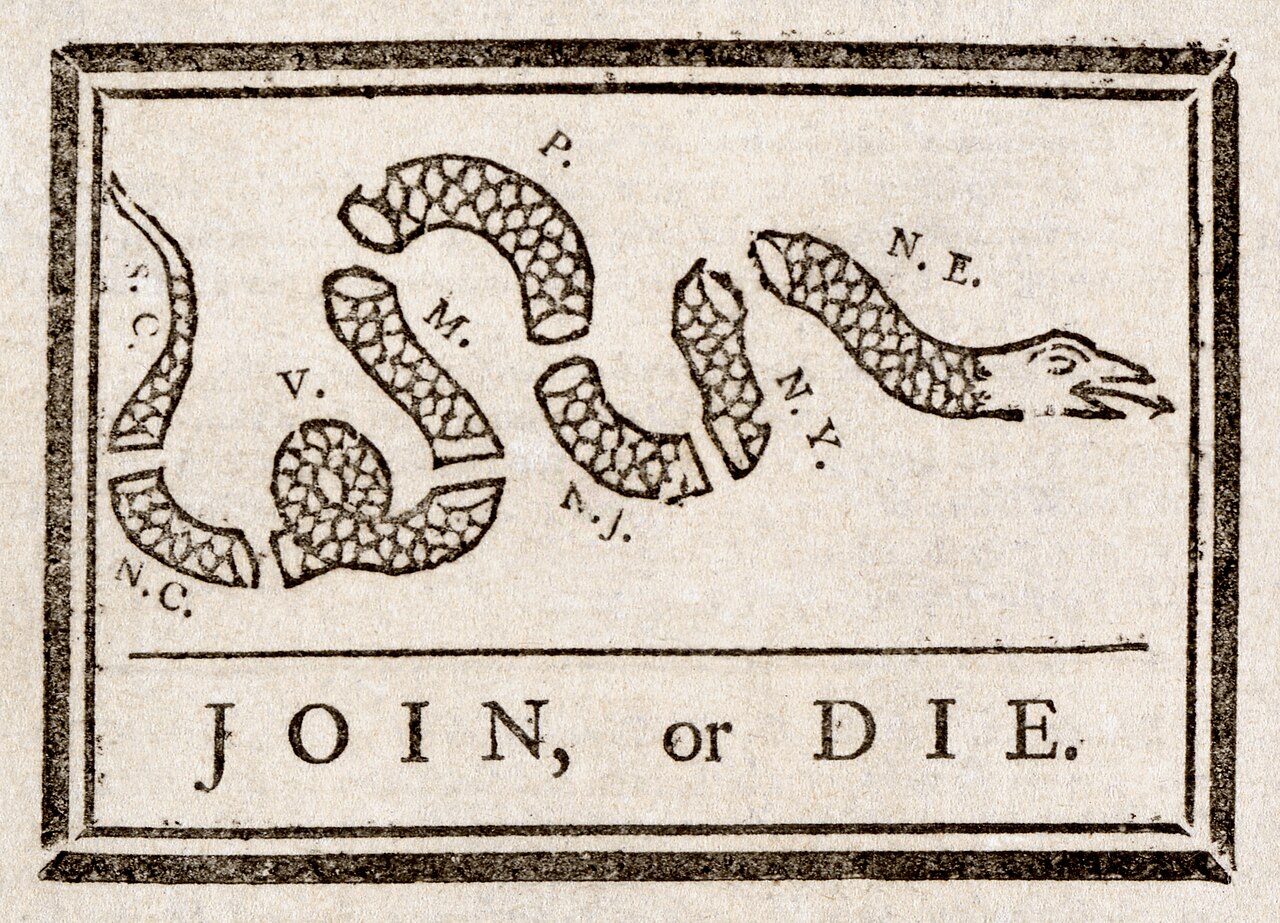
The most obvious comparison is Benjamin Franklin’s famous “Join, or Die” cartoon, first published in the Pennsylvania Gazette in 1754 during the French and Indian War.
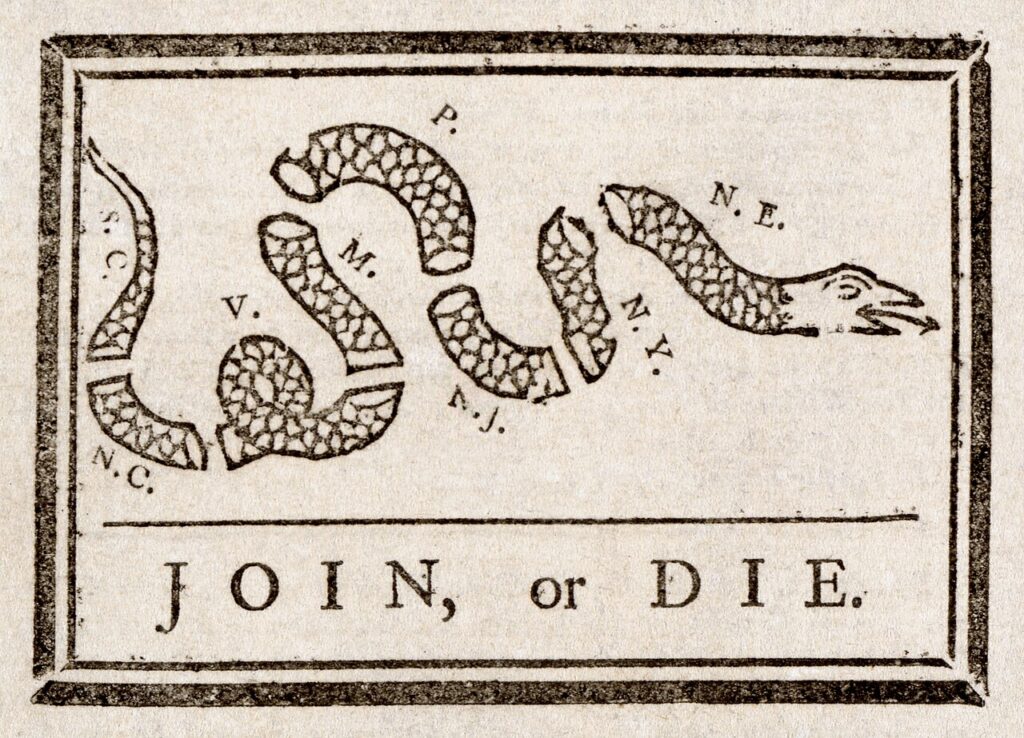
Franklin depicted a snake divided into sections representing the colonies. The message was simple: divided, the colonies were weak; united, they could survive.
The snake later became one of the recurring symbols of Revolutionary America. So when an illustration connected to Justin’s grandfather contains divided snakes, it is at least reasonable to notice the resemblance.
It is not proof of a clue. But it belongs to the same symbolic vocabulary.
The Olives
The olives suggest another possible Revolutionary association: the Olive Branch Petition.
In July 1775, with fighting already underway, the Second Continental Congress made one final attempt at reconciliation with King George III. The petition reaffirmed loyalty to the Crown while asking for a peaceful resolution to the growing crisis.
The effort failed.
Again, olives on a shirt are not enough to establish that the illustration is referencing the Olive Branch Petition, but placed alongside colonial coinage, divided snakes, and the broader theme of America’s beginnings, the possibility becomes interesting.
The Rattles
The rattles themselves may have a much simpler meaning. There is no need for every object to encode a national symbol. Within Justin’s story, they already possess meaning because Grandpa Posey gave them to him.
That may actually be more important. The rattles are evidence of a relationship conducted partly through objects.
One other idea I have for the rattle comes from the fact that he says “cursive” and the time period I find myself swimming in.
The Declaration of Independence comes to mind when I think about remembering something. The purpose of the Declaration of Independence was a lot of things but came about because Ottis and a other soon to be founding fathers realized that there needed to be a clear reason everyone could look at to remember why they were fighting.
This is a little looser purhapse due to the possibility of bias and trying to overstretch meaning but it is one that I can not shake.
The Title
The title may contain another reference to early America.
“pilgrimage” appears close enough to pilgrams and raises the possibility that the resemblance is intentional. If so, the word pilgrim creates an interesting connection to the Plymouth story.
William Bradford, one of the Mayflower passengers and later governor of Plymouth Colony, used the word “pilgrimes” in Of Plymouth Plantation while describing the Separatists leaving Leiden for their journey to America. His language drew on the biblical image of “strangers and pilgrims” seeking another country.
The settlers were not commonly called “the Pilgrims” at the time, but Bradford’s description eventually helped give them the name by which they are remembered today.
That makes the possible wordplay in “Postal Pilgrimage” interesting in the context of everything else in the illustration. We already have imagery that can be associated with colonial America and the Revolution. If the title is also pointing toward pilgrimage, it may push the imagery one step farther back, toward the story of the country’s earliest English settlers.
I cannot say that is what the title means. But within the larger pattern, it is difficult not to notice.
Back To the Coin
Now return to the 1652 shilling. Justin calls its history “the story of, well, us.”
That makes sense on the national level. Massachusetts silver belongs to the story of colonial America, self-government, tension with English authority, and the world that eventually produced the Revolution.
But perhaps “us” works on another level too. Maybe the coin also belongs to a family story.
If Grandpa Posey was the grandfather who gave it to Justin, the gift begins to resemble the rattles.
That possibility led me into the Posey family history.
A Genealogical Lead
This is where the evidence becomes much less certain but none-the-less interesting.
The Posey surname appears in records extending into colonial America, and I found individuals bearing the last name Posey and related spellings in Maryland and Revolutionary-era records. One particularly interesting name is Francis Poschet, who appears in records connected with the French and Indian War and later Revolutionary-era service.
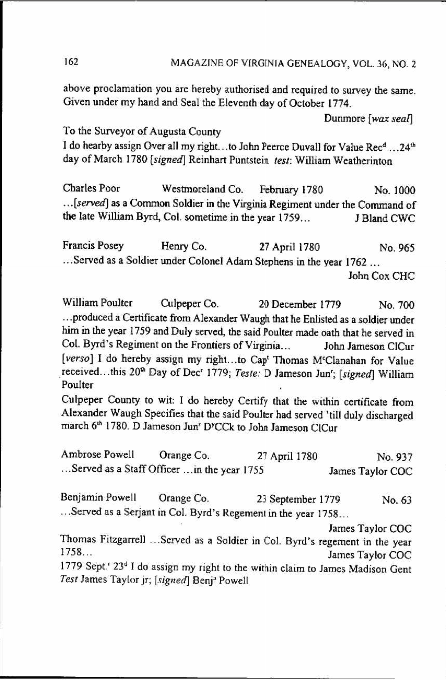
I have also found Maryland records containing Posey names that appear potentially relevant to the lineage I am tracing.
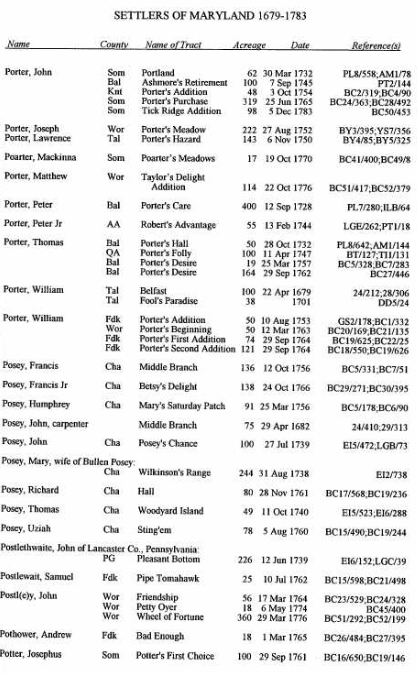
But I want to draw a bright line here.
I have not yet established, generation by generation, that these individuals are direct ancestors of Justin Posey.
A matching surname is a lead, not a lineage.
That distinction matters because the theory becomes much stronger if the family connection can actually be documented.
If it can, then Grandpa Posey’s side of the family may have roots reaching back into the same broad colonial world represented by the 1652 shilling.
And if Grandpa Posey knew that history, the coin might have carried a meaning beyond its monetary value.
For now, it remains a possibility.
I still have to go through all the records found at https://www.sar.org/ to see if there is a direct connection. If this theory is correct, then I can only imagine that it would have been important to file it officially.
So Which Grandfather Gave Justin the Coin?
I cannot prove it. Based on what Justin has publicly said, either grandfather remains possible.
Grandpa Fitzwater was a collector and an outdoorsman, which gives him an obvious connection to old and unusual objects.
But Grandpa Posey has something Fitzwater does not: an established pattern, within Justin’s own storytelling, of turning a shared experience into a physical keepsake.
He gave Justin the rattles. He introduced Justin to the story that helped make him a treasure hunter, and he appears in the portion of Justin’s family story most closely associated with inherited history.
For those reasons, Grandpa Posey is my leading candidate for the grandfather who gave Justin the counterfeit 1652 shilling.
But that is an inference, not a solved fact. The second question, why, is even harder.
My suspicion is that Justin’s interest in history and treasure gave the coin meaning between them. Perhaps there was a conversation attached to it. Perhaps there was a family trip, a story about their ancestry, or simply a grandfather recognizing that one particular grandson would appreciate an old coin and everything it represented.
We do not know. What we do know is that Justin kept it. Even after learning it was counterfeit, he could not bring himself to tell his grandfather. Later, when he had the opportunity, he acquired a genuine 1652 shilling.
And ultimately, it holds importance to the hunt.
I think what is more important is the question that hasn’t been asked. I don’t believe Justin said that his grandfather knew the coin was real. That is an assumption that Justin later proved false. If the coin were real, then his grandfather knowingly gave something of value to his grandson, from one collector to another (even at his young age). If his grandfather knew the coin was fake, then perhaps he knew his grandson would some to learn the truth about it eventually, discovering other truths along the way.
By asking the question not asked, we see a corollary to this hunt. Justin has stated he would like to see his treasure go to another collector and isn’t that one of the goals of this hunt, to discover the truth while learning other truths along the way?
Finally, and I mean no disrespect, but I have to consider all possibilities. Why is Justin so interested in reposting your blog? Is it just because he likes it, or perhaps there is another reason? As a treasure hunter, I have to consider the evidence hidden in plain sight. To me, this could be seen as showing special treatment to another searcher. We’ve already seen the fallout from his interest in the “Misfits”, the special server (which he said he wouldn’t be a part of) and the optics of his potential involvement with the cipher solution.
Justin is fond of loopholes, so could it be that he’s using others such as yourself to put forth information or clues? The evidence I’ve uncovered along the way points to a hunt filled to the gills with AI, clues embedded in fake websites and, quite possibly, others involved with hunt tasked with “helping this hunt along.”
Good treasure hunters find treasure. Great treasure hunters uncover the truth.
Those are valid points.
My own reading is that his grandfather probably did believe the coin was real, especially given the comment about feeling bad and not wanting to tell him otherwise. Of course, it is also possible that his grandfather knew and simply never said anything. I can certainly see that interpretation as well. For me, the exact semantics of that part are probably less important than the larger story.
As for sharing these posts, I know he shares a lot of things he is tagged in on Instagram, along with interviews and other mentions. I would like to think there is still some value in sharing more than just an image, perhaps a little deeper thought or a story behind it. Whether he actually enjoys that sort of thing, your guess is as good as mine.
I suppose I could simply stop posting, but that would run somewhat against the reason I started sharing these things in the first place. Part of the enjoyment for me is researching them, thinking about them, and putting an opinion out there.
It would be nice to know that I got some of the information right, and even nicer to think that sharing an opinion publicly adds something worthwhile to the conversation. Maybe that is really all it is. I honestly do not know.
Happy Hunting
Thanks for your reply. Please continue to share. I do love reading your posts. I think you and I share a lot of similar thoughts about this hunt and it’s nice to see someone express that much better than I can.
For sure. I’d love to read some other people’s thoughts as well. I know sometimes posts can feel like “just another roundabout way of saying the same thing over and over again,” but I still find it interesting to see how different people think about or approach the same ideas. You should share some of your own thoughts too—I’d definitely be interested in reading them.
I think this is too deep. The point of the coin, I believe, is the start of the 2nd set of coordinates. To bakers hole campground. XII aka 101.1-0142.